The Role of Collagen in Joint Health: Fact or Hype?


If you’ve been anywhere near Instagram, a health podcast, or that one overly-enthusiastic fitness friend, you’ve probably heard the hype: “Take collagen, it’s amazing for your joints!”
Suddenly, every cafe sells collagen coffee, every influencer is stirring collagen into their smoothies, and every health brand is launching some “magical joint-support powder” that promises to fix your life.
But let’s pause the hype train for a moment. Is collagen genuinely good for your joints… or is it just the wellness industry trying to sell us ‘expensive protein’?
Let’s break it down with a little science, a little humor, and answers that actually make sense.
So… what even is collagen?
Imagine collagen as the “glue” of your body literally. The word comes from the Greek kolla, meaning glue, and that’s exactly what it does: it holds everything together.
Collagen is the most abundant protein in your body, making up about 30% of your total protein, and it’s involved in almost every structure that keeps you upright and functioning.
It supports skin elasticity, keeps your bones strong, holds your tendons and ligaments together like sturdy ropes, cushions your cartilage so your joints can move smoothly, and yes it plays a major role in every step, stretch, and twist your body makes.
Where Does Collagen Matter in Joint Health?
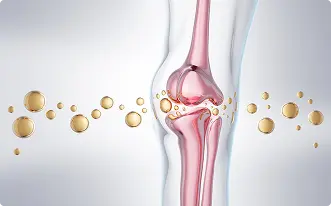
Your joints basically depend on a cushion called cartilage, a smooth, rubbery tissue that allows bones to glide against each other without pain. Guess what cartilage is largely made of?
Yep, collagen.
When collagen levels drop, which naturally happens as we age, cartilage breaks down. That leads to:
- Stiffness
- Pain
- Reduced flexibility
- Inflammation
- Slower recovery after activity
Your joints start feeling like they’ve been personally offended by you. Simple movements like bending, climbing stairs, or even getting out of bed suddenly feel like a mini workout.
That dull ache after a long day? Or the sharp pinch when you shift your weight? Yep, declining collagen often sits behind that.
Touching your toes becomes a distant childhood memory, and your joints feel less “smooth” and more “rusty door hinge.”
As cartilage weakens, the joints experience more friction, which triggers inflammation, adding more discomfort to the mix.
You may notice that after a walk, workout, or even long sitting hours, your joints take longer to “bounce back.”
The dramatic sound effects you hear when you stand up: crackkk, poppp, clickk
No, it doesn’t mean you’re turning into an old radio; it's your joints reacting to reduced cushioning.

This is why collagen is often linked with conditions like osteoarthritis and general joint discomfort. But here’s the real question:
Does Taking Collagen Actually Help… or Is It Hype?
Let’s address the elephant in the room, or rather, the collagen jar in your kitchen.
1. The Science Says: It Can Help
Multiple studies show that collagen supplements can improve joint pain, especially in:
- Athletes
- People with early joint degeneration
- Those with osteoarthritis
- People with low dietary protein intake
Collagen peptides (the type used in supplements) are broken down into amino acids and absorbed by the body.
Some studies even show that these amino acids stimulate your cartilage cells (chondrocytes) to produce more collagen.
Translation: You’re basically giving your joints the raw materials they need to rebuild.
2. It’s Not Magic.
Sorry to disappoint you, you cannot reverse 20 years of knee damage with two scoops of collagen powder.
Supplements can help reduce pain, improve mobility, and slow down wear and tear, but they won't:
- Grow brand-new joints
- Turn a 50-year-old knee into an 18-year-old athlete’s knee
- Give you superpowers (unless glowing skin counts)
3. Not All Collagen Is Created Equal
This is where things get tricky. There are different types of collagen, but the most relevant for joints is Type II Collagen, commonly found in chicken cartilage.
Hydrolyzed collagen (collagen peptides) is the most easily absorbed version.
If you’re buying supplements, make sure they’re not just expensive placebos with pretty packaging.
But Wait… Does Eating Collagen Even Reach Our Joints?
A fair question. When you eat collagen, your stomach breaks it down into amino acids.
Some people argue:
“If the body breaks it down anyway, how will it know to send it to my knees?”
Good news: research shows that small collagen peptides do survive digestion and reach the bloodstream. And in some studies, they accumulate in cartilage tissue.
So yes, your knees do get the memo.
But and this is important, collagen works best when the rest of your lifestyle supports joint health too.
Let’s Clear Up Some Myths Because There Are MANY
Myth 1: Collagen replaces worn-out cartilage instantly.
Nope. It supports the repair process, but your body still does the actual healing.
Myth 2: Only older people need collagen.
You actually lose collagen from your mid-20s. Yes… the downfall begins early.
Myth 3: Vegetarians can get the same benefits from plant collagen.
Hate to break it to your plants that don't make collagen.
They offer nutrients that support collagen production, but not collagen itself.
Myth 4: Collagen is only for joint pain.
People love it for skin, hair, nails, gut health… it’s pretty much the multi-tasker of the supplement world.
Then Why Do Some People Say Collagen Did Nothing for Them?
Because collagen isn’t a miracle powder that fixes every problem instantly.
Here are the common reasons why it “didn’t work”:
1. Wrong type of collagen
Using Type I collagen (for skin) and expecting joint results is like using face wash and expecting weight loss.
2. Not enough dosage
Most studies show benefits at 10g daily. Half-scoops won’t do much.
3. Expecting results in a week
Collagen usually takes 8–12 weeks to show real joint improvements.
4. Not pairing it with proper nutrition
Your body also needs:
- Vitamin C
- Copper
- Zinc
- Protein
Think of collagen as an ingredient, not the whole recipe.
The Biggest Question: Should You Take Collagen?
Here’s a simple way to decide:
Take it if:
- You workout regularly
- You run or jump a lot
- You sit for long hours
- You experience knee/ankle discomfort
- You’re over 25 and want to slow down degeneration
- You’re recovering from an injury
- You have a family history of osteoarthritis
Skip it if:
- You expect magical results
- You don’t want supplements
- You can’t take animal-based products
- You believe wellness trends are scams (fair enough)
Natural Ways to Boost Collagen Because Supplements Aren’t Everything
Collagen supplements can definitely help, but you don’t have to rely on them alone.
Your everyday food and lifestyle choices can naturally boost collagen production too.
Including nutrient-rich foods like bone broth, chicken skin, fish with skin, eggs, citrus fruits, berries, nuts, seeds, garlic, and beans can give your body the building blocks it needs to produce collagen.
While only animal-based foods actually contain collagen, the plant-based ones support your body’s ability to create more of it internally.
Along with diet, your lifestyle also plays a major role. Staying active, maintaining a healthy weight, doing regular strength training, avoiding smoking, reducing inflammation, drinking enough water, and protecting your joints from overuse all help your body preserve and build collagen more efficiently.
At the end of the day, your body responds best to consistency, not just supplements.
So… Fact or Hype? Here’s the Verdict
Collagen is not magic. But it’s not just hype either.
The truth lies somewhere in the middle:
✓ It’s a fact that collagen plays a major role in joint health.
✓ It’s a fact that supplements can improve joint pain and mobility.
✓ It’s a fact that aging reduces natural collagen levels.
✗ It’s hype when brands claim it can “reverse aging” or “cure arthritis overnight.”
If you take collagen consistently, with the right type, right dosage, and realistic expectations, you’ll likely feel a difference.
If you take it hoping it’ll turn you into a superhero… Well, the only thing getting powered up is the marketing team.
Final Thoughts: Should Collagen Join Your Daily Routine?
So, should collagen join your daily routine? If you’re looking for better joint comfort, smoother mobility, support during workouts, slower cartilage wear, and a safe, research-backed supplement, then collagen is definitely worth trying.
But if you’re expecting a magic powder that fixes everything instantly, requires zero effort, or acts like a knee replacement in a jar, collagen will only leave you disappointed.
At the end of the day, your joints are like your best friends; take care of them early, and they’ll stay loyal for years to come.
And if collagen can give them even a little extra support along the way… why not give it a try?
Latest News & Blogs
The Role of Collagen in Joint Health: Fact or Hype?
The Role of Collagen in Joint Health: Fact or Hype?


Why Women Are More Prone to ACL Injuries and How to Prevent Them
Why Women Are More Prone to ACL Injuries and How to Prevent Them